
Across diverse mining projects worldwide, one consistent lesson emerges: meaningful dialogue between communities, companies and governments is needed to unlock solutions to deep-rooted conflicts.
Since our launch in 2025, RR has been undertaking extensive research to inform our approach and deepen our understanding of the drivers and dynamics of conflict and division across a number of natural resource sectors. This has included examination of a large set of case studies in the global mining sector from the Americas to Europe, Africa to Asia. Below, we share our observations about this research and share three of the many lessons we’ve drawn from this work.
Introduction: a rising tide
Numerous industry and academic studies over the past two decades have pointed to the increasing prevalence and cost of conflict and division around mineral resources, whether in the form of mounting international tensions, investor-state disputes, large-scale public anti-mining campaigns or project-level community unrest. The relatively stable regulatory and policy consensus that prevailed in the 1990s has given way to something less solid and predictable.
Paradoxically, this trend has coincided with the mining industry’s growing interest in securing a ‘social licence to operate’ through a set of practices designed to build stakeholder support by minimising adverse environmental impacts and transferring a greater share of socioeconomic benefits to host countries and communities.
These practices are critically important and necessary in many ways and have helped to improve the performance of an industry with a ‘dirty and dangerous’ legacy. However, the trend of rising conflict and division suggests that these approaches have been insufficient to address the tide of rising host-country expectations, community mobilisation and NGO scrutiny. As one sustainability leader from a major mining company with a solid reputation for its approach told us recently: “we can do best in class social performance, but it doesn’t stop bad things happening – whatever we do, we always seem to cause friction, erode local leadership and generate conflict”.
The possible reasons for this are numerous and complex. However, RR believes that one major explanation is that these practices do not take account of the full range of societal and political dynamics and effects that are produced when large-scale infrastructure-led mining and energy projects meet complex, sometimes fragile, social systems.
In most ESIAs, for example, the delivery of jobs and business opportunities to host communities is viewed uncritically as a ‘positive impact’. However, many cases of mining related conflict we have reviewed (including the case study for Tip 2 below) suggest that internal community tensions over access to and control of these opportunities has been a major source of strife for mining companies and the communities themselves.
Cases of mining-related conflict similarly reveal that many disputes are driven by stakeholder frustration at being excluded from decision making – this despite the much more widespread consultation of community and regulatory stakeholders. In the case study for Tip 1, it wasn’t until community perspectives on water provision were integrated into project design that local stakeholders were willing to endorse the project.
This leads us to believe that to enhance the now-established social licence to operate toolkit, two things are required: the more widespread adoption of a ‘conflict-sensitive lens’ to mining investment – understanding how social and political dynamics are likely to be affected by the mining investment – and a more comprehensive commitment to deeper and open dialogue with governments, communities and other interested parties.
In light of this, we offer three ‘tips’ – inspired by the large set of case studies we have reviewed.
Tip 1: Understand the power of dialogue
When experiencing intense disagreements and conflicts, sitting down to explore differences and find common ground with angry stakeholders can seem like a big investment of time and effort, and can feel risky. But it can also transform relationships between stakeholders and is capable of unlocking projects for mutual benefit.
This tip is nicely exemplified by the 2012 dialogue around Anglo American’s Quellaveco project in Peru – a hugely strategic project for Anglo – that was blocked by community protests for several years and by government reluctance to approve the project without community consent.
To unlock the project, Anglo convened a multi-stakeholder dialogue – independently mediated by the provincial governor and bringing in independent technical and scientific expertise – and in 18 months negotiated 26 agreements to remodel the project, secure community consent and ensure proper follow-up. First copper was produced in 2022.
Tip 2: Check your assumptions
When developing a project, it’s easy for a developer to assume it knows what communities and governments need and to shape a value proposition that aligns with those assumptions. However, if that value proposition doesn’t take account of the wide diversity of people’s needs, interests and concerns, it can be divisive, damage trust and generate conflict.
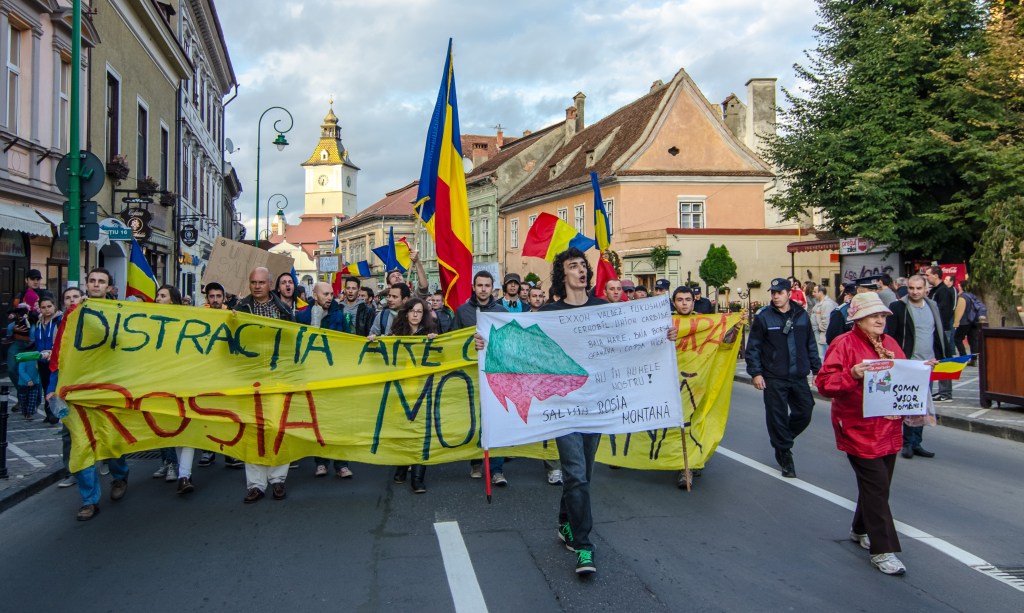
This tip is well illustrated by the conflict around the Roșia Montană gold project in central Romania. It could have been Europe’s largest gold mine and the developer felt it had a strong value proposition – jobs, business opportunities and environmental remediation that could transform a region that had suffered deindustrialisation and agricultural decline in recent years. But initial community opposition from local action groups escalated quickly, drawing in regional environmental NGOs, the EU parliament and ultimately contributed to anti-government protests across the country.
So how did it get resolved? It wasn’t. Ultimately, the developer went to arbitration and lost, and the project area was subsequently designated as a World Heritage Site – putting paid to any ambitions to develop the resource.
Could anything have been different? It’s difficult to say, but an earlier effort to understand the breadth of community interests and concerns could have prevented the subsequent escalation. While the developer attracted some support among more urban communities around the mine, what it appeared to miss in its engagement was the growing sense of marginalisation among rural farming communities and broader mistrust and frustration towards the Romanian government. Earlier dialogue might have increased the scope for this group’s participation, generating interesting and unexpected opportunities for working together with these groups.
Earlier dialogue might have increased the scope for this group’s participation, generating interesting and unexpected opportunities for working together with these groups.
Tip 3: Offence isn’t always the best defence
This tip is based on the insight that when governments make policy choices that threaten returns, it’s a natural response for resource companies to consider the legal protections available. But leaning too hard on legal strategies can aggravate, escalate and prolong disputes and close down the space for negotiation.
This tip is well illustrated by Acacia Mining’s experience in Tanzania. A new mining code ratified in 2015 prompted Acacia to adopt a strong position – warning that it would open arbitration proceedings if the law was applied to its assets – but this triggered a series of tit-for-tat escalatory moves that led to Acacia facing multibillion-dollar fines from Tanzania and a set of further legal moves that hardened positions on all sides.
How did it get resolved? Settlement was ultimately reach 4 years later, but at significant financial and reputational cost. Could it have played out differently? Perhaps. An earlier engagement with the government around the intention of its 2015 policy shift could have avoided the escalation; more nationalistic tendencies had been part of Tanzanian mining policy debates for at least 10 years.
Rather than seeking to induce Tanzania to back down, Acacia arguably could have looked for opportunities to break out of the debate about the rights and wrongs of its tax position. Rather than allowing themselves to get locked in a dispute in which the two sides were focused on the merits and demerits of their past relationship, Acacia and the Tanzanian government could have fostered a discussion about how their future partnership might work.
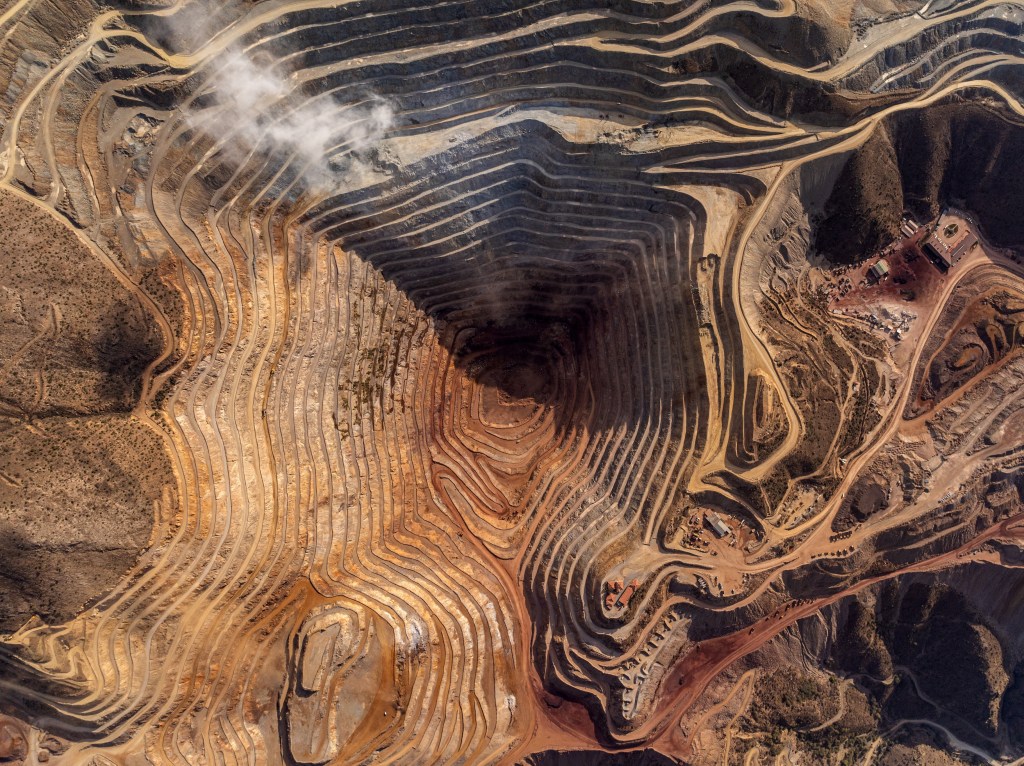
Image: Aerial view of Open-pit iron mine in Kayseri, Turkey – 2190576179
Image: Brasov, Romania – September 15, 2013: People protesting against Romanian government support for a plan to open Europe’s biggest open-cast gold mine in the small Carpathian town of Rosia Montana – 458350067
 Resource Resolutions